

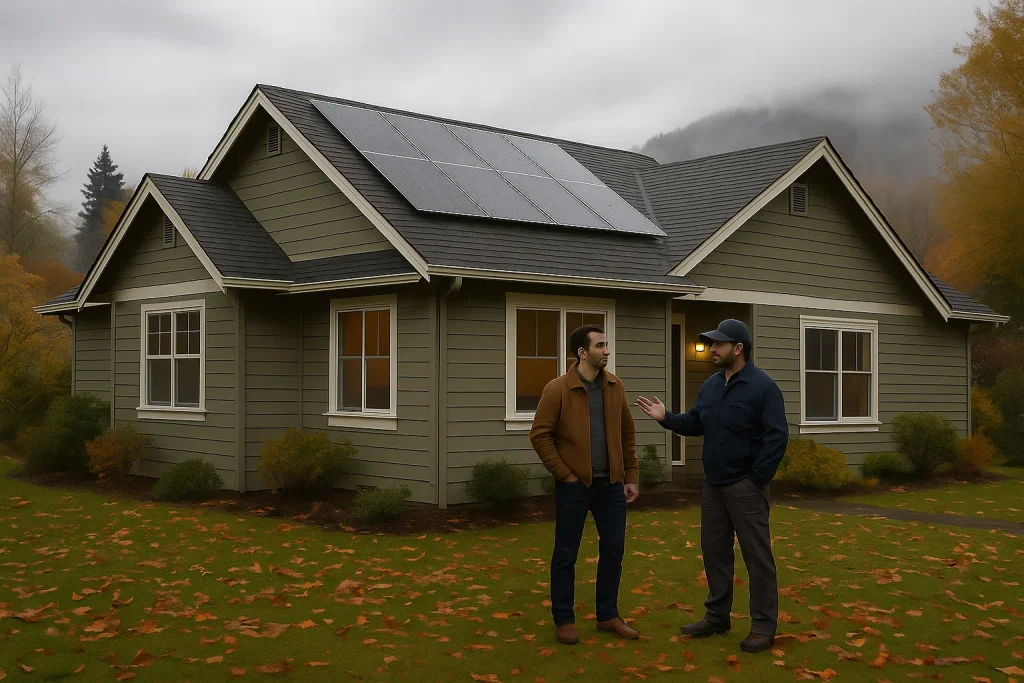
When the days grow shorter and the gray skies roll in, many Burlington homeowners start to wonder: Does solar still work in the fall? It’s a fair question—after all, the Pacific Northwest is known for its overcast skies and drizzly days. But the truth might surprise you: solar panels continue to generate energy efficiently throughout the fall and winter months, even when sunshine seems scarce.
Solar Power and Cloudy Weather
It’s a common misconception that solar panels only work well in full sun. In reality, solar technology captures both direct and indirect sunlight, meaning panels can still produce electricity on cloudy days. While output may dip compared to bright summer afternoons, modern solar panels are designed to perform efficiently even in diffuse light conditions.
In fact, cooler temperatures actually help your panels operate more efficiently. Excessive heat—like what you’d see in summer—can slightly reduce solar output. So, while Burlington’s fall weather brings more clouds, it also provides the kind of crisp air that helps your solar system run at peak performance.
Cold Weather Can Still Be Good for Solar
Solar panels rely on sunlight rather than heat, so cold temperatures don't prevent them from generating electricity. In fact, solar panels can operate more efficiently in cooler conditions than they do during periods of extreme summer heat. As long as sunlight reaches the panels, they can continue producing energy through the winter.
Snow and debris can be more of a concern. Snow accumulation can temporarily block sunlight and reduce production, so it's worth checking your panels after significant snowfall or storms. Many systems are installed at an angle that allows snow to slide off naturally, but keeping an eye on your panels can help you catch potential issues before they affect production.
Cloudy Days Don't Stop Solar Production
Solar panels don't need bright, direct sunshine to produce electricity. They can also capture diffuse light that passes through cloud cover, although production will generally be lower than it would be on a clear day.
For Washington homeowners, that means the gray skies common during fall and winter don't bring solar production to a complete stop. Cooler temperatures can also help panels operate efficiently, allowing the system to continue generating electricity even when winter conditions reduce the total amount of available daylight.
Understanding Seasonal Energy Production
It’s normal to see lower overall energy production in fall and winter due to shorter days and lower sun angles. The sun simply doesn’t stay up as long, which limits total generation hours. However, solar systems in the Pacific Northwest are sized with this seasonal variability in mind. Over the course of a year, your panels are designed to generate enough power to balance the highs of summer with the slower months of fall and winter.
If your home is connected to the grid, net metering helps offset this seasonal difference. You’ll likely earn credits for the extra power you send to the grid during long summer days and then use those credits to help cover your electricity needs during the darker months.
Use Solar Energy Strategically During Winter
Because winter brings fewer daylight hours, it can help to adjust when you use electricity. Running high-energy appliances during daylight hours allows you to take advantage of the electricity your solar panels are producing instead of drawing as much power from the grid.
Monitoring your system can also help you understand how it's performing throughout the season. Most modern solar systems provide an app or dashboard that lets homeowners track production. Comparing your winter output with expected seasonal production can help you distinguish normal seasonal changes from an unexpected drop that may require professional attention.
Rain, Dirt, and Maintenance Tips
One of the hidden perks of Burlington’s wet climate is that it naturally helps keep your panels clean. Regular rainfall washes away dust, pollen, and debris that can reduce efficiency in drier areas. However, it’s still a good idea to visually inspect your panels a few times a year—especially after windy or stormy weather—to ensure no leaves or branches are blocking sunlight.
If you notice grime or moss buildup, a gentle rinse with a garden hose (from the ground) is usually all that’s needed. Avoid harsh cleaners or abrasive brushes, as they can damage the panel surface.
System Design Matters Year-Round
Winter performance also depends on how well your solar system is designed for your home. Roof orientation, pitch, shading from trees or nearby structures, and panel placement can all affect how much energy your system produces.
A professional solar assessment can account for these factors and provide realistic production estimates based on your home and local conditions. Proper installation also matters for long-term performance, including secure mounting, weatherproof electrical connections, and properly sealed roof penetrations.
The Bigger Picture: Why Solar Still Makes Sense
Even with cloudy skies and shorter days, solar power remains a smart long-term investment in the Pacific Northwest. Energy costs continue to rise, and solar systems can reduce your utility bills year-round while shrinking your carbon footprint. Plus, fall is an ideal time to schedule an installation—temperatures are mild, contractor schedules are more flexible, and your system can be ready to capture every ray once spring arrives.
Solar power doesn’t hibernate when the weather cools down. Your panels will continue to work through fall and winter, contributing clean, renewable energy to your home. In the Pacific Northwest, where cloudy days are a way of life, today’s solar technology proves that a little gray doesn’t have to get in the way of going green.
Our team of Home Performance Experts has served the I-5 corridor from Blaine to Marysville, Oak Harbor to Concrete, and the San Juan Islands since 1972 with a mission of Improving Lives™. We look forward to serving you too! Contact Barron Solar today for panel installation.