
Many homeowners think of a fireplace primarily as a source of comfort and ambiance during the colder months. The warmth of a fire and the cozy atmosphere it creates can make any home feel more inviting. However, beyond aesthetics and comfort, a properly maintained fireplace can also play an important role in improving your home’s overall energy efficiency—especially when it comes to how your HVAC system performs.
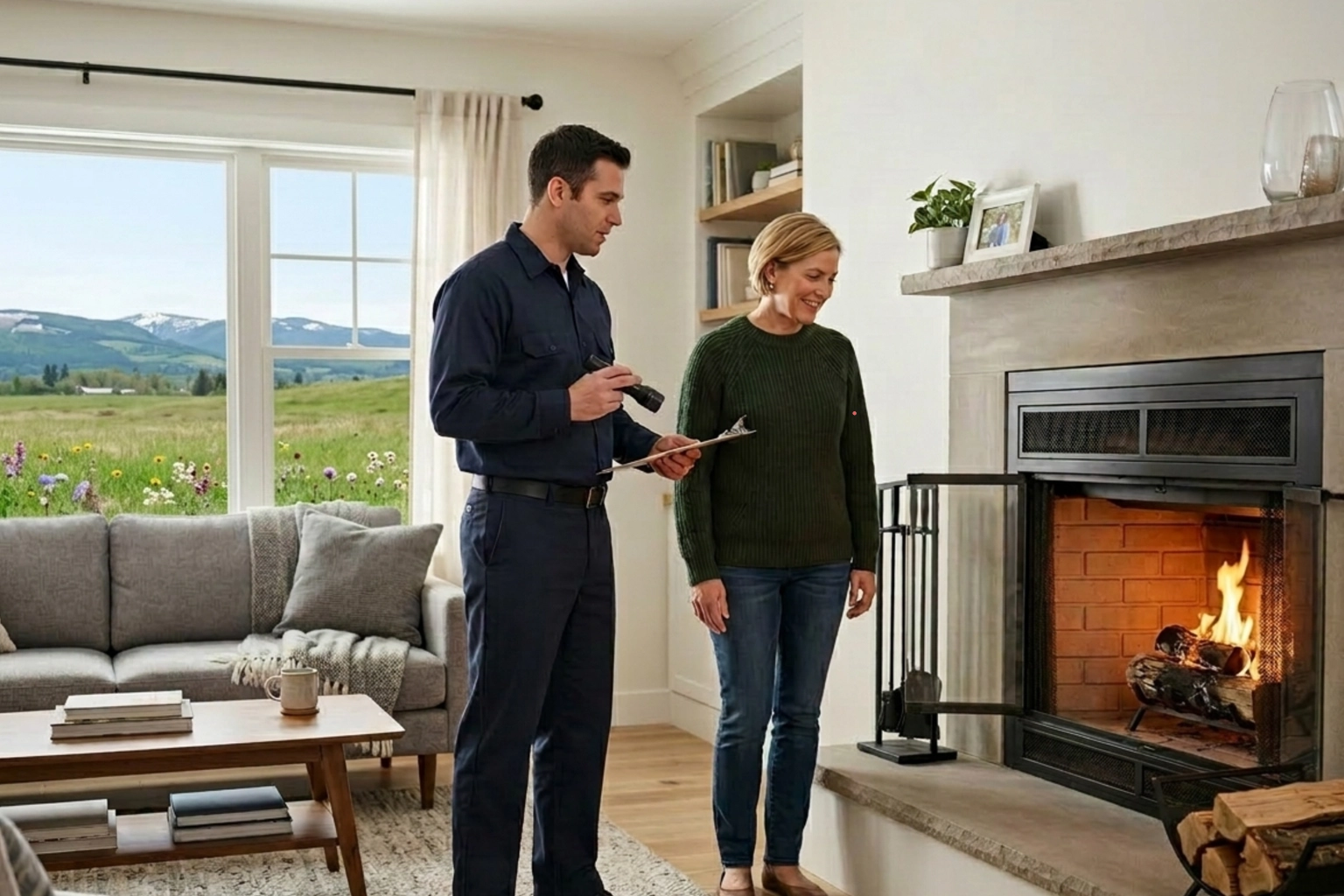
How Fireplaces Affect Home Heating Efficiency
When a fireplace is clean and functioning properly, it can supplement your home’s heating system and reduce the workload on your HVAC equipment. By generating localized heat in commonly used areas such as living rooms or family rooms, a fireplace can help maintain comfortable temperatures without requiring your furnace or heat pump to run as frequently.
This type of “zone heating” allows homeowners to warm the rooms they use the most while potentially lowering the thermostat for the rest of the home. As a result, the HVAC system cycles less often, which can reduce energy consumption and help lower heating costs over time.
The Importance of Regular Fireplace Maintenance
While fireplaces can support home heating efficiency, they only do so effectively when they are properly maintained. Over time, soot, creosote buildup, and debris can accumulate in the chimney and firebox. This buildup restricts airflow and prevents the fireplace from burning efficiently.
A poorly maintained fireplace may produce less heat, release more smoke, and even allow warm indoor air to escape through the chimney. When heat escapes, your HVAC system must work harder to maintain comfortable temperatures throughout the house. Regular chimney inspections and cleanings ensure that air flows properly and that heat generated by the fire stays inside the home where it belongs.
Preventing Heat Loss Through the Chimney
One of the most overlooked efficiency issues with fireplaces is heat loss through the chimney when the fireplace is not in use. If dampers are damaged, stuck, or left open, warm indoor air can rise and escape through the chimney, much like leaving a window open during winter.
Proper fireplace maintenance includes ensuring that dampers function correctly and seal tightly when the fireplace is not being used. A well-sealed chimney helps keep conditioned air inside the home, reducing unnecessary strain on your HVAC system and improving overall energy efficiency.
Improving Airflow and Indoor Comfort
A properly maintained fireplace can also contribute to better indoor airflow and comfort. When chimneys and flues are clear of blockages, smoke and combustion gases vent outside efficiently, preventing backdrafts and maintaining balanced air pressure in the home.
Balanced airflow is important because HVAC systems rely on consistent air circulation to distribute heated or cooled air evenly throughout the house. If airflow becomes disrupted by poor ventilation or chimney issues, it can impact how effectively your HVAC system operates.
A Smart Part of Your Home Efficiency Plan
Maintaining your fireplace is not just about safety or appearance—it can also support your home’s overall energy performance. When fireplaces and chimneys are inspected regularly, cleaned properly, and equipped with functional dampers, they can help reduce heat loss and supplement your home’s heating system.
By incorporating regular fireplace maintenance into your home care routine, you can improve comfort, support HVAC efficiency, and potentially reduce energy costs during colder months. It’s a simple step that helps ensure your fireplace remains both a cozy feature and a practical contributor to your home’s energy efficiency.
Our team of Home Performance Experts has served the I-5 corridor from Blaine to Marysville, Oak Harbor to Concrete, and the San Juan Islands since 1972 with a mission of Improving Lives™. We look forward to serving you too! Contact Flrelight by Barron today for fireplace maintenance.