

A sump pump is a quiet guardian of your basement, keeping floodwaters at bay and protecting your home from costly water damage. But like any mechanical system, it can fail—often at the worst possible time. Whether due to power outages, mechanical wear, or improper setup, sump pump failures can be disastrous.
Thankfully, with a bit of planning and regular care, you can significantly reduce the risk of failure and keep your sump pump running smoothly for years to come. Here are some practical tips to ensure long-term reliability. Just make sure you schedule sump pump maintenance with the pros at Barron.
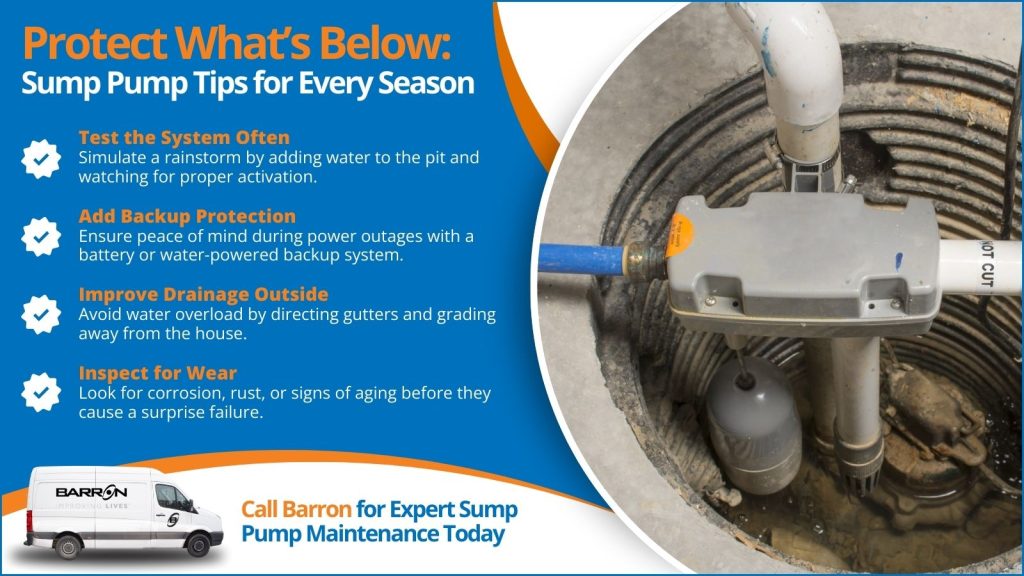
Perform Regular Maintenance
Routine maintenance is the most effective way to catch problems before they lead to failure. Start by checking your sump pump every few months and especially before heavy rainy seasons. Remove the pump cover and inspect the pit for debris that could clog the intake or the float. Test the pump by pouring a bucket of water into the basin to ensure it activates and drains correctly. Clean the pump screen and inlet opening to prevent obstructions, and make sure the float switch moves freely. At least once a year, consider removing the pump to clean it thoroughly and inspect it for rust or wear.
It’s also a good idea to check the pump after it runs during a storm or plumbing emergency. Watch for water that drains slowly, a pump that does not start, or one that continues running after the pit empties. These can be signs that your sump pump needs attention before the next heavy rain.
A professional inspection adds another layer of protection. Barron Plumbing can check the discharge line for debris or blockages, examine electrical connections for signs of damage or corrosion, and inspect mechanical components such as the float and check valve. Addressing small problems early can improve your pump’s reliability and help extend its lifespan.
Install a Backup Power Source
Power outages are one of the most common causes of sump pump failure, especially during storms when you need it the most. A backup power source ensures your pump keeps working even if the lights go out. Battery backup systems are a popular solution—they automatically kick in when power fails and can keep the pump running for several hours. Another option is a water-powered backup pump, which uses your home’s water pressure to move water out of the sump pit without relying on electricity. For ultimate peace of mind, consider installing a generator to power your entire sump system during an extended outage.
Ensure Proper Drainage Around the Pump
A sump pump’s job becomes much harder when it has to deal with excess groundwater caused by poor drainage. Start by checking your home’s gutters and downspouts—make sure they’re clear of debris and direct water at least 10 feet away from the foundation. Grading your yard away from the house can also prevent water from pooling near the foundation and seeping into the basement. Inside, make sure the sump basin is correctly installed and that the discharge line is free of blockages, including ice in the winter months.
During an inspection, a plumber can also look for installation issues that prevent water from reaching the sump pit properly. If water is entering your basement but little or none reaches the pit, the pump cannot remove it effectively, even if the pump itself works.
Test the Check Valve
A check valve on the discharge line prevents water from flowing back into the sump pit after it’s been pumped out. If this valve fails, it can force your sump pump to work harder and wear out faster. Inspect and test the check valve regularly to ensure it’s working properly. Get it replaced if you notice water returning to the pit or if it shows signs of age or corrosion.
A pump that runs continuously can also point to a stuck float or water flowing back through a faulty check valve. If adjusting or clearing an obvious obstruction does not solve the problem, schedule an inspection to find the cause.
Know When to Consider a Replacement
Maintenance can help your sump pump last longer, but it cannot prevent every failure. If your pump is around 10 years old, needs frequent repairs, or struggles to keep up with incoming water, ask a plumber whether repair or replacement makes more sense. An inspection can help you make that decision before you have to rely on the pump during a storm.
Our team of Home Performance Experts has served the I-5 corridor from Blaine to Marysville, Oak Harbor to Concrete, and the San Juan Islands since 1972 with a mission of Improving Lives™. We look forward to serving you too! Contact Barron Plumbing today for routine sump pump maintenance.