
For many solar panel owners, winter can bring a sense of uncertainty. Shorter days, lower sun angles, and cloudy weather may raise concerns about whether your system is producing enough energy to justify the investment. The good news is that solar panels are more resilient—and effective in winter—than many people realize. With a few practical steps and the right expectations, you can continue to get strong performance even during the year’s darkest months.
Understanding Your Solar Panel System
First, it helps to understand how solar panels actually work in cold weather. While winter days are shorter, solar panels are not powered by heat; they’re powered by sunlight.
In fact, panels often operate more efficiently in colder temperatures than in extreme summer heat. As long as sunlight reaches the panels, they can generate electricity—even on cold, crisp days. Snowy weather can also be less of a drawback than it seems, since fresh snow reflects sunlight and can boost production when panels are exposed.
The Real Challenges of Winter
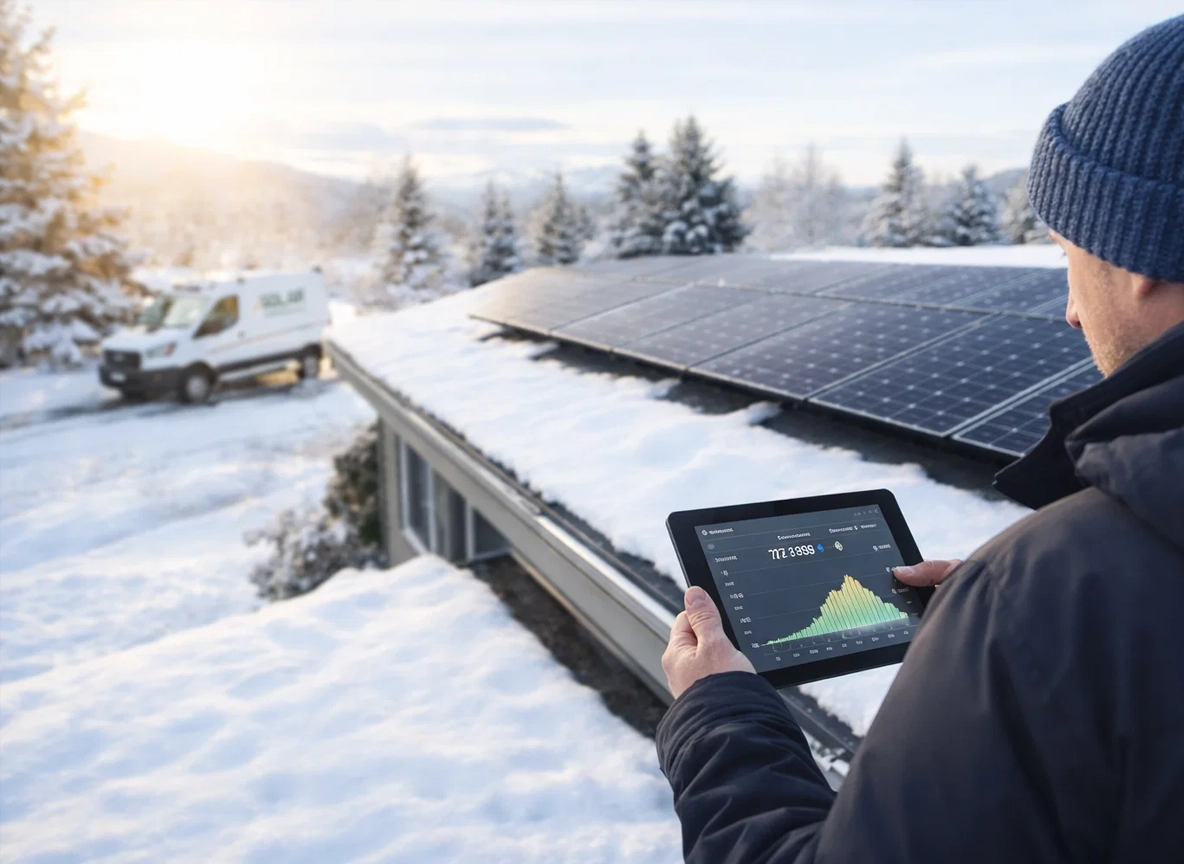
That said, winter does bring challenges, and maintenance becomes more important. One of the simplest ways to maximize winter efficiency is by keeping your panels clear. Snow accumulation can temporarily block sunlight, so if it’s safe to do so, gently removing snow after a storm can help restore production faster. Many systems are installed at an angle that allows snow to slide off naturally, but checking after major snowfall is still a smart habit.
Monitoring your system’s performance is another key step. Most modern solar setups include monitoring apps or dashboards that show how much energy your panels are producing day by day. Comparing winter output to expected seasonal averages—rather than to summer highs—can provide reassurance and help you spot potential issues early. If production drops unexpectedly, it may be worth contacting your installer or service provider for a quick check.
Change Your Habits to Fit the Season
Energy usage habits also play a role during winter. Since your panels may produce less total energy, using electricity strategically can make a noticeable difference. Running high-energy appliances during daylight hours, when your system is actively producing power, helps you use more of your own solar energy instead of pulling from the grid. Small changes like this can improve overall efficiency and savings.
It’s also worth remembering that winter performance is part of a bigger picture. Solar systems are designed with annual production in mind, not just month-by-month output. The extra energy your panels generate during long, sunny summer days helps balance out the quieter winter months. Over the course of a year, your system can still meet—or exceed—its expected performance.
Think Long-Term
Finally, winter is a great time to think long-term. If you’re consistently concerned about winter output, adding battery storage or reviewing your system’s design may be worthwhile options. These upgrades can provide added peace of mind and flexibility year-round. Our team can help you with these adjustments.
Winter may be darker, but it doesn’t have to be discouraging. With realistic expectations, simple maintenance, and smart energy use, your solar panels can continue working hard for you—no matter the season.
Our team of Home Performance Experts has served the I-5 corridor from Blaine to Marysville, Oak Harbor to Concrete, and the San Juan Islands since 1972 with a mission of Improving Lives™. We look forward to serving you too! Contact Barron Solar today for prompt repairs or assistance with your solar panels.