
Freezing temperatures can turn a normal winter day into a household emergency. When water inside your pipes freezes, it expands, increasing pressure and raising the risk of cracks or bursts. Knowing what to do quickly—and what not to do—can make a major difference in preventing costly damage. This emergency guide walks homeowners through the right steps if they suspect frozen pipes.
Schedule emergency plumbing repairs with our team in Bellingham or beyond!
The First Signs of a Frozen Pipe
The first signs of frozen pipes often include little or no water coming from a faucet, unusual smells from drains, or visible frost on exposed pipes. If you notice any of these warning signs, act immediately. Frozen pipes are time-sensitive problems: the longer they remain frozen, the greater the risk of rupture once the ice begins to thaw.
Keep Faucets on to Alleviate Pressure
Start by turning on the affected faucet. Open both the hot and cold sides slightly. This relieves pressure in the system and allows melting ice to escape as water instead of building up inside the pipe. If you know where the frozen section is—often in basements, crawl spaces, garages, or exterior walls—focus your attention there.
Next, apply gentle heat to the frozen pipe. You can use a hair dryer, heating pad, or space heater positioned safely nearby. Always begin heating closest to the faucet and work your way toward the frozen area. This helps prevent trapped steam from building pressure behind the ice. Never use an open flame, blowtorch, or propane heater; these can damage pipes and create serious fire hazards.
Need Help? Call Our Pros
If you cannot locate the frozen pipe, or if multiple fixtures are affected, it’s best to stop and call a professional. Attempting to thaw pipes blindly can lead to missed cracks or sudden bursts that cause flooding. This is where calling one of the plumbers on our team becomes critical. Our experienced professionals have the tools to safely thaw pipes, assess hidden damage, and prevent further issues before they escalate.
Burst Pipes
If a pipe has already burst, immediately shut off your home’s main water supply and, if possible, turn off the electricity in affected areas to reduce the risk of electrical hazards. Then contact a plumber right away. Fast response is essential for precise repairs and damage mitigation, especially when water has begun to spread behind walls or under flooring.
Prevention Is Key
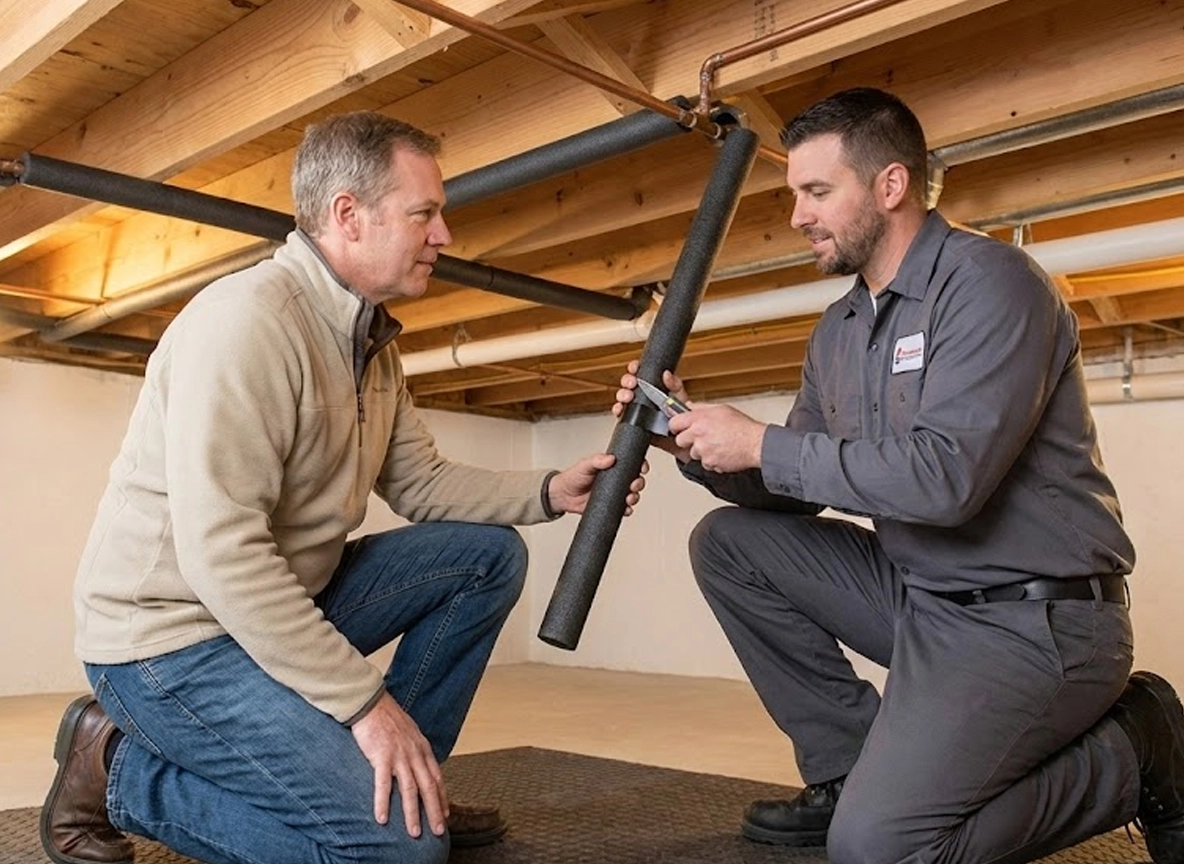
Once the immediate emergency is handled, take steps to prevent frozen pipes in the future. Insulate exposed pipes, seal air leaks near plumbing, keep cabinet doors open during cold snaps, and allow faucets to drip slightly during extreme cold. These small measures can significantly reduce the risk of freezing.
Frozen pipes are stressful, but you don’t have to handle them alone. Acting quickly, using safe thawing methods, and calling one of the skilled plumbers on our team can protect your home, minimize damage, and restore peace of mind when winter weather strikes.
Our team of Home Performance Experts has served the I-5 corridor from Blaine to Marysville, Oak Harbor to Concrete, and the San Juan Islands since 1972 with a mission of Improving Lives™. We look forward to serving you too! Contact Barron Plumbing today for fast plumbing service.